A new age of empires?

(I know I should keep my non-writing thoughts to myself, especially the spicy ones. My website should be gentle and kind, filled with posts that inspire people to buy my books. But I love my opinions: I LOVE THEM. Even though I do not research them, and I will change them at the drop of a hat. So if you’re put off by rash geo-polical rambling, please skip this post.)

After World War 2, there was a consensus in Western civilization that empires were inherently wrong, and would be relegated to the past. Europe as a whole had been in constant conflict between competing imperial powers for a couple thousand years. This was a chance to stop the cycle of military buildup, confrontation, and destruction, and they took it. Not that Europe had much choice. They graciously allowed the U.S.A. to be the guarantor of peace on the continent and they put aside their territorial grievances through complicated diplomacy instead of warfare.

Both sides of the political spectrum agreed to this change in perception. For example, the U.S. Right referred to the U.S.S.R. as the “evil empire” while the U.S. Left called all American interventionism “imperialism”. And for decades, that consensus has been dominant. (Imperialism was re-labeled Colonialism in recent years, but the sentiment is the same.) The U.S.S.R. collapsed under its own weight, the natural death spiral of all aging empires. And the former Western empires slowly divested themselves of their territories and colonies.

But there was a mistaken assumption that the negative perception of empires as outdated and wrong meant Imperialism was dead would be forgotten. The idea of empire in the West was alive but in a deep sleep. And in such sleep it dreamed darkly. The dream of empire surfaces into our collective consciousness occasionally. Remember when women on social media were astounded that men think about the Roman Empire frequently? Well they ain’t thinking about Rome because they love the look of togas. (Full disclaimer: I am one of those dudes that thinks about Rome almost every single day).

But the opponents of the West did not sleep. ISIS tried to build a multi-national caliphate, and continues to use horrifying, brutal violence around the world. Iran manipulates the Middle East via its murderous puppets like Hamas, Houthis and Hezbollah. Russia launched its bloody war on Ukraine, while working to undermine other Eastern European countries. Africa is in a continual upheaval as nations, tribes and religious factions fight for dominance. China took Tibet, and now looks to reclaim Taiwan.

This is the world that America finds itself in. My guess is that they are sincere when they talk about the imminent danger posed by China. And in a scenario that has the U.S. in direct conflict with China, there is currently a possibility that the U.S. loses. They don’t have the capacity to rapidly scale up their ammunition and war machine production to match China’s massive manufacturing advantage.

And now they have a presidential administration that rejects the established political consensus. They feel like their allies take them for granted, and are more liability than asset. These U.S.’s “allies” have let their own militaries atrophy, spending the bare minimum on national defense while talking about how important they are to America. Europe should have been building their armies over the last 4 decades, but it was easier to let it slide and assume America would save them. Every flavour of Canadian politician has underfunded the Canadian Armed forces, despite being told time and time again by every American administration that we needed to start pulling our weight.

So they are taking matters into their own hands. The tariffs are meant to force reshoring of manufacturing and self-sufficiency. They believe that Greenland is a strategic asset that would be beneficial to be under control of America, as an example. They don’t care that you think empires are bad. In a speech about space exploration, Trump used the phrase “manifest destiny”. This is the belief that America has the right to expand and take over the continent and beyond. In other words: an empire.

I don’t want you to mistake this half-baked analysis as a glowing endorsement for America’s actions. Everything the Trump admin does is sloppy, rushed, and needlessly cruel. I don’t think the tariffs will work, and the will cause a lot of financial pain across the globe. But its unhelpful to think all of these decisions are being made on a whim to suit the demented dreams of one crackpot. There is a vision behind it all, and that vision is shared by all the people involved in the Executive branch.

As an aside, the China threat theory explains some of the harshness towards Canada. Canada has a worrying inability to free itself from Chinese government influence and interference. We have illegal Chinese police stations, voter/citizen intimidation, and thriving Chinese organized crime syndicates that include Fentanyl production and distribution in their portfolio. Our Federal government has been alarmingly resistant to addressing these issues. Add to that our lax border control and inability to keep track of non-citizens in our country, and you can see why America doesn’t see us as their super-best friend anymore.
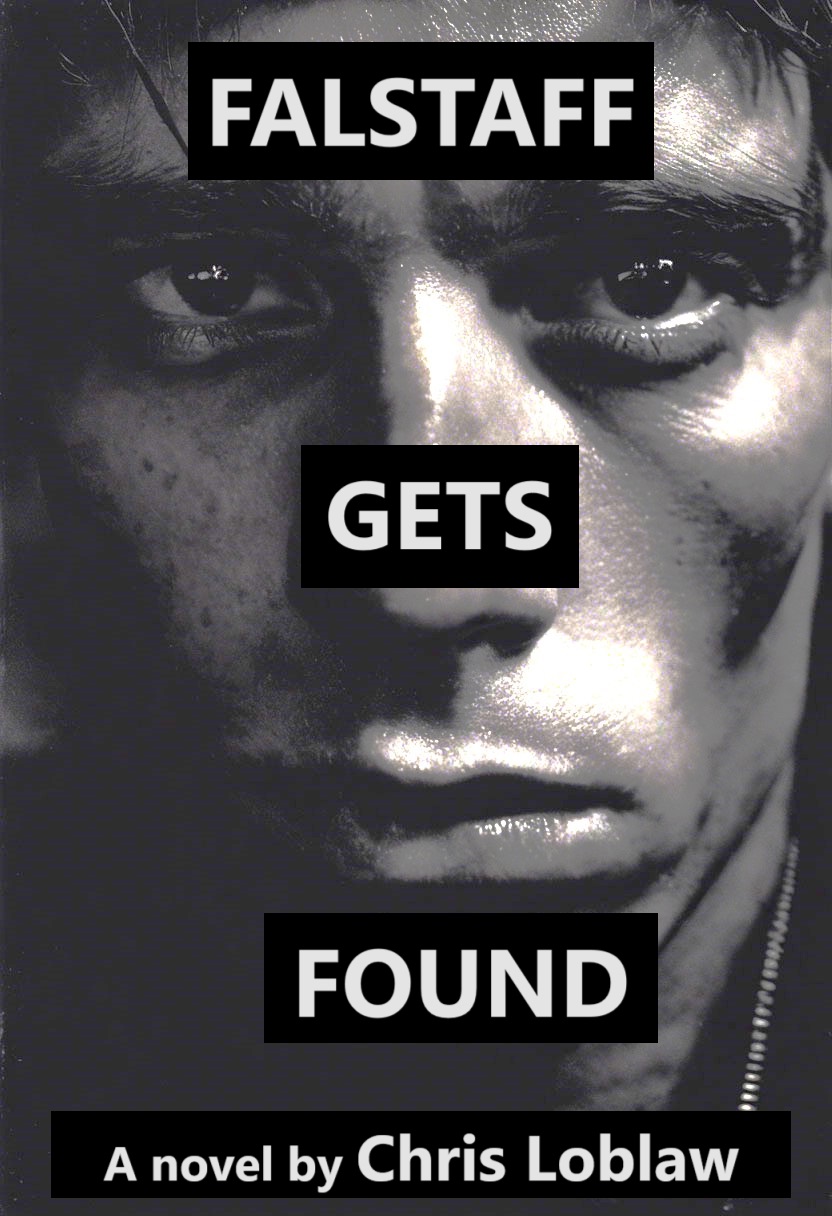
New book, who dis?

That’s right, audience, I’ve got a brand new book for you to read and enjoy. PLEASE NOTE: this is a detective thriller novel meant for mature cool cats like you. Do not let children/overly sensitive neurotics read Falstaff Gets Found. Its full of nasty words and dirty deeds. Murder, even!

Here is the link to buy it: Falstaff Gets Found

To give you a better idea of what this thing is about, here’s the back of the book summary for you:

“John Falstaff is dying in the dirt of a Las Vegas scrapyard when The German gives him a job: find the gangbang killer. Reluctantly, Falstaff agrees as his heart stops beating.

Falstaff is no hero. He never wanted to be a detective. He cannot fight. His only true love is whatever dope he can get his hands on. He alternates between running from responsibility and running face first into trouble. But he has two tricks up his sleeve. He can withstand an astounding amount of physical abuse, making him very hard to kill. And he can read the dirty little secrets written all over your face.
If only he could keep his big mouth shut.”

Exciting? DARN TOOTING. And this is only the first book in the series. Get on board now, and look forward to 7 more stories (give or take) featuring our favourite walking disaster, John Falstaff.

If you would like a physical copy and you’re near me, I will directly sell you a copy of the book for $15, which is $10 less than the Amazon Mega-corp will charge you. Take that, Jeff Bezos! Just contact me through the various methods and we’ll set things up.

Are we pandas?

Survival instincts? Nada.

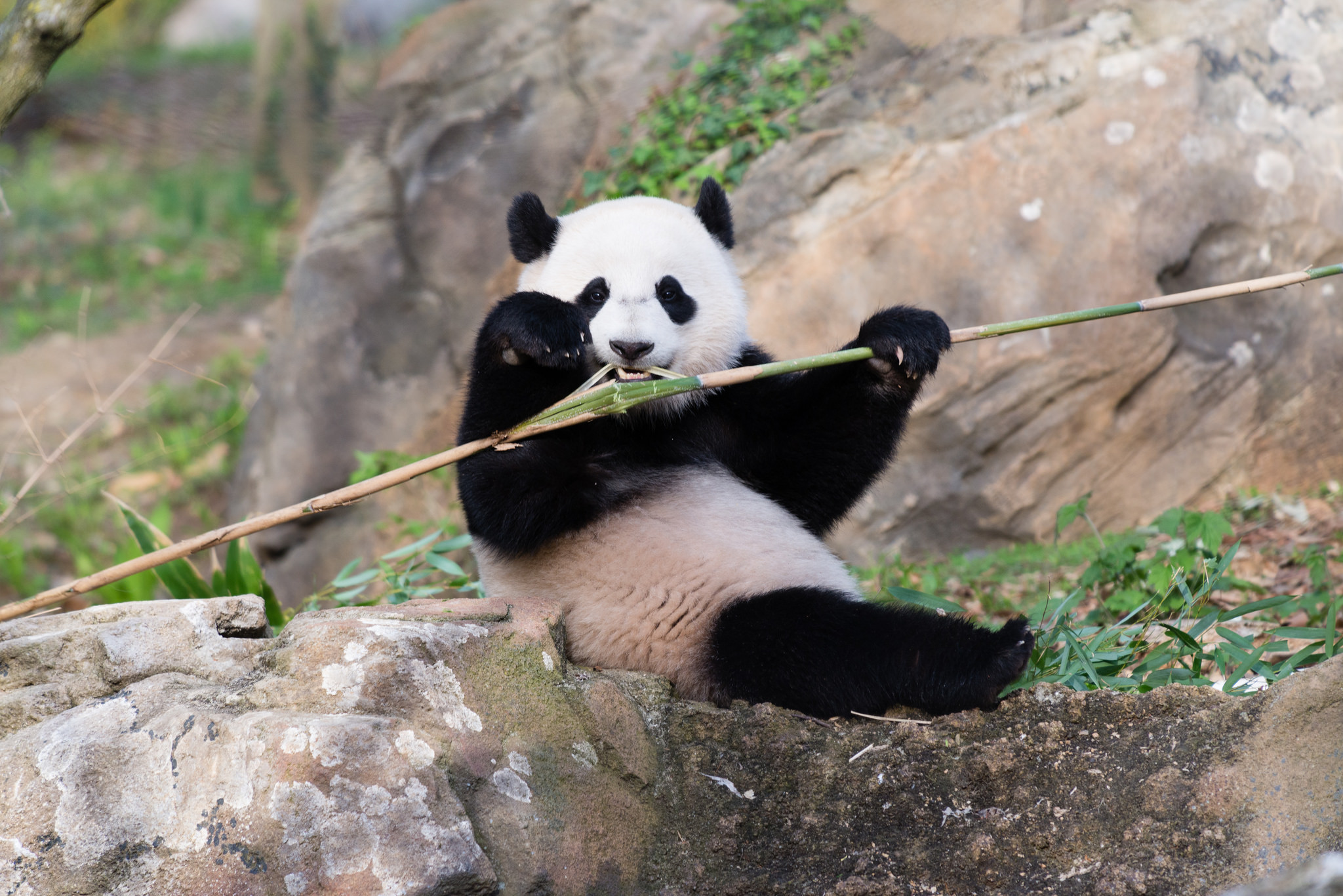
Is there a species that has, as the kids say. “fallen off” more than the panda? A bear that can’t fight, barely reproduces, and has trouble with basic physical coordination. They fall out of trees and off of playground equipment made for human toddlers. The panda is no longer equipped for survival. It cannot recognize danger and even if it could see trouble coming, it would be unable to do anything about it.

And I gotta tell you, there are some things about the current state of our human species that uncomfortably remind me of those black and white failures-to-thrive. Before I explain, I need you to know that I am doing my level best to restrain the unhinged rant that the paranoid alarmist in my head wants to unleash.

Not today, crazy Me. Not today.

That isn’t to say that the remainder of my argument is well-thought out and reasonable, it’s just more reasonable that the stuff I keep shoved in the back of my mental closet. So you’ve been warned. Do not take any of this as professional advice, and certainly do not make any changes to your own life based on a theory I put together while unloading the dishwasher.

What are the panda traits I see in humanity right now?

Difficulty in procreation

You’d think making babies was a skill that was impossible to lose, but we’re doing our best to forgot how. Global fertility rate has fallen significantly over the last 70 years.

The magic number on this chart is 2.1. When your nation’s fertility rate drops below the rate of 2.1 children per woman, your population starts to shrink. More deaths than births. Its not a great scene. There are some countries that still have robust fertility rates (most of them in Africa and southeast Asia) but that won’t last forever. As countries become richer, their citizens have more choices for how to spend their lives. Parenthood is a considerable commitment of time and resources, and young men and women in prosperous nations are choosing to spend those resources elsewhere.

Another symptom of prosperity is a lack of pressure for a child to leave their parent’s home to start their own adult life. We can keep our kids at home, protecting them from the drudgery of adult obligations, until they are well into their twenties. But biology does not care about that. Both men and women hit their fertility peak around 23 years of age. So when you finally send your adult child out into the world at 25, they are already on the fertility downslope.

And then add a layer of rigid sexual norms that inhibit normal human interaction. Sure, the young folks talk a lot, A LOT, about sexual identity, but they adhere to increasingly puritanical restrictions around sex. Who is allowed to approach who, what difference is age is acceptable, what lengthy and legally binding consent agreements must be in place before holding hands. It’s enough to make a Victorian lady nod in restrained approval.

It’s also not helping that we think we can order the perfect partner via an app, like picking from a dessert cart. There is no perfect mate. Great partnerships (and babymaking is arguably the most important partnership you’ll ever have) are built on mutual growth and understanding. It’s not who you are today that’s important, but who you’ll become in the years ahead, and you build that parental version of yourself collaboratively.

Danger blindness

(I just made that phrase up. If you don’t like ‘danger blindness’ you can go be mad somewhere else. We don’t have time for that here). Survival depends on seeing danger ahead of time, and choosing to get out of its way. But we are victims of our own survival success. We are so much safer today than we were 20 years ago, and astoundingly safe in comparison with our ancestors. Most of us live a life of ease and comfort, surrounded by miracles like on-demand clean water and instantaneous communication with anyone around the world. That doesn’t mean we have stopped looking for danger, but it does mean that we’ve lost the ability to accurately recognize it. Whatever made us angry/scared/uncomfortable most recently is designated as The Big Problem, and it consumes our attention and resources. But at least we never check to see if our efforts to fix The Big Problem are actually having an effect.

Lack of personal responsibility

I’ll start by taking responsibility on behalf of my species: humans have done a great job in wiping out the wild pandas, and we should not have done that. Our love of shaping the natural environment to our liking has shoved the pandas out of their ecological niche. Our bad. But under that pressure from humanity, pandas haven’t really risen to the challenge of adaptation. I’m not panda-blaming, but a more resilient species would have at least explored an adaptive strategy.

So now the pandas needs humans to curate a safe environment that provides all the resources they need. Even in the wild, humans have to help the pandas survive. And a panda in the zoo has absolutely no self-sufficiency left in their body. They sit patiently in their play tree, waiting for food to show up. If they are grateful for the food when it shows up, I’ve never seen it. (Note: I do not watch pandas regularly. This is all a tortured metaphor)

That same attitude is prevalent in the complaints of modern society. An expectation that society owes you food and lodging, and to keep you in the manner in which you believe you deserve. But a thriving species needs to be self-reliant. Each adult member of our species is responsible for providing for their own basic needs, and for the basic needs of those who depend on them. In the case where an adult is incapable of providing for their own needs, the state should intervene to help them so that they can be as self-sufficient as possible. But “I don’t like working” does not qualify for state intervention.

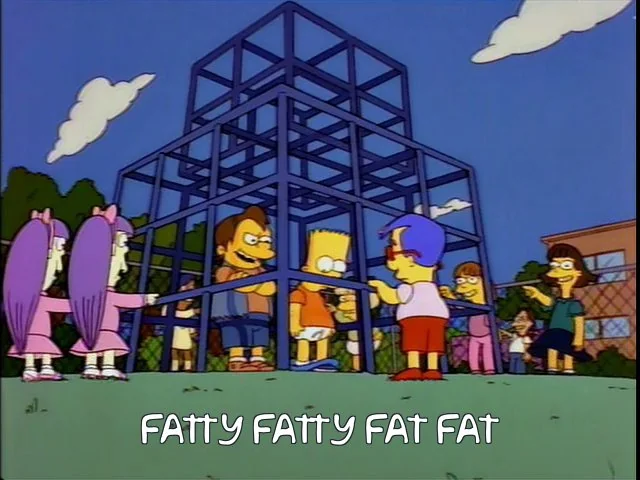
Fatness

To be fair, I don’t know if pandas are carrying too much weight. Other bears seem to have a lot of junk in the trunk, so maybe the pandas are appropriately chubby. But for the sake of this argument, let’s assume pandas are fat. We certainly are.

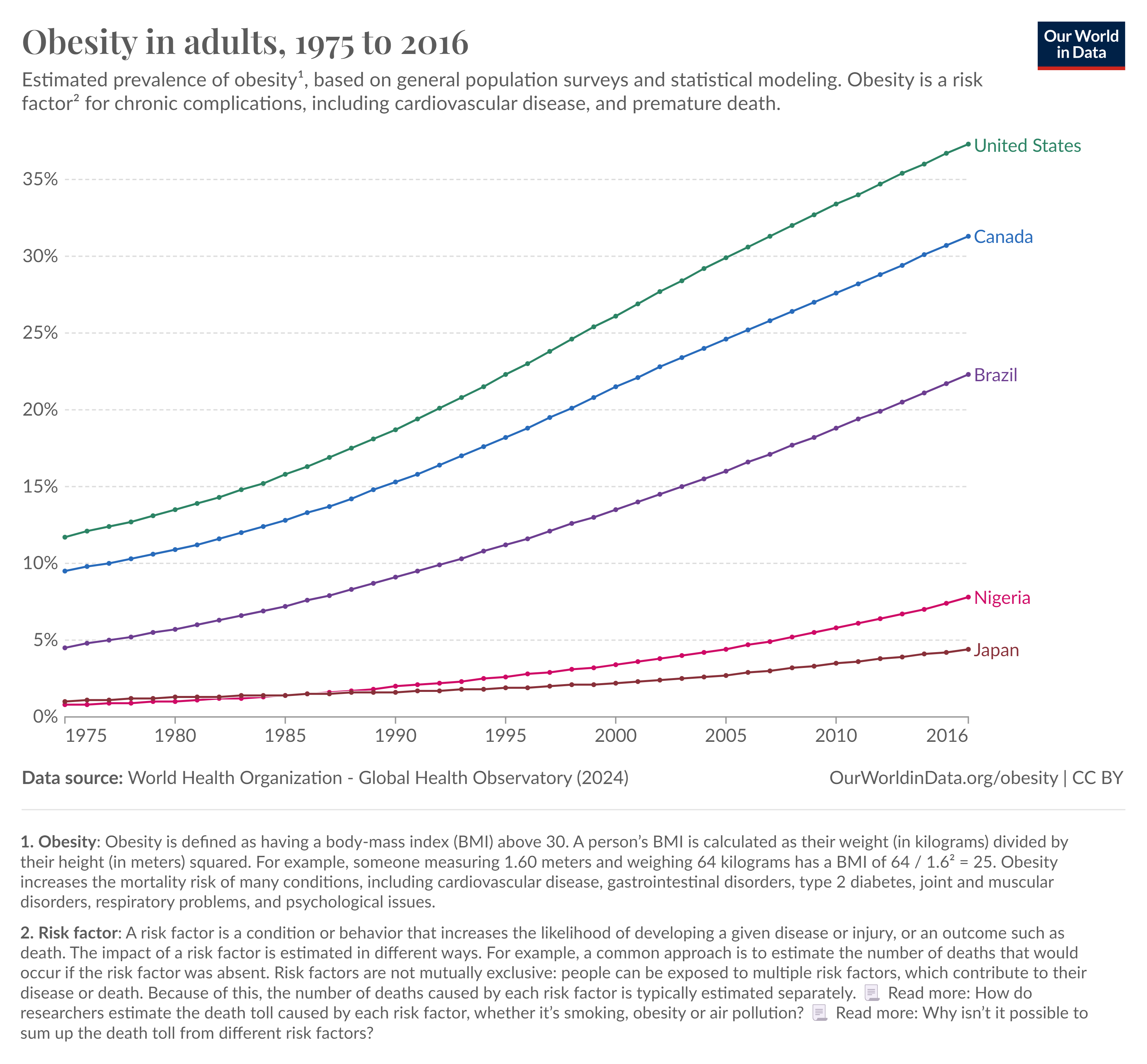
We are fat, and getting fatter. No, it’s not because of GMOs, or seed oils, or microplastics, or systemic oppression. We eat more calories than we use, and the excess is stored as fat. Our meaty bodies are designed to expend as little energy as possible, while consuming as many calories as possible. And boy oh boy are we great at that. We eat too much. Our food is too rich. And our lives require very little physical effort. It all adds up to obesity, and obesity is detrimental to our survival.

But do not despair! Put down the donut of sadness! Look instead at places like France and Japan. Both have much lower rates of adult obesity. I’m not suggesting we embrace either country’s dietary and exercise regime. But it’s important to remember that other humans are succeeding at something we want to succeed at. It is not a lost cause.

What does it all mean?

I don’t think we’re doomed for extinction. It’s my crackpot pessimism that wants to bemoan our panda similarities. The things that I’ve listed are real challenges, but the human spirit is much harder to snuff out. Our big brains love to find new puzzles. Our gentle decline in population could be addressed by robotic workers and cloning. We may have found a cure for our overeating (though I’d like a little bit more evaluation time before I sing the praises of Ozempic for all).

But for our resiliency to shine through, we have to take risks. Being risk-averse leads to calcified societies afraid of loud noises and scary shadows. Humans thrive on adventure, and the biggest adventure available to us is space. To the stars!