
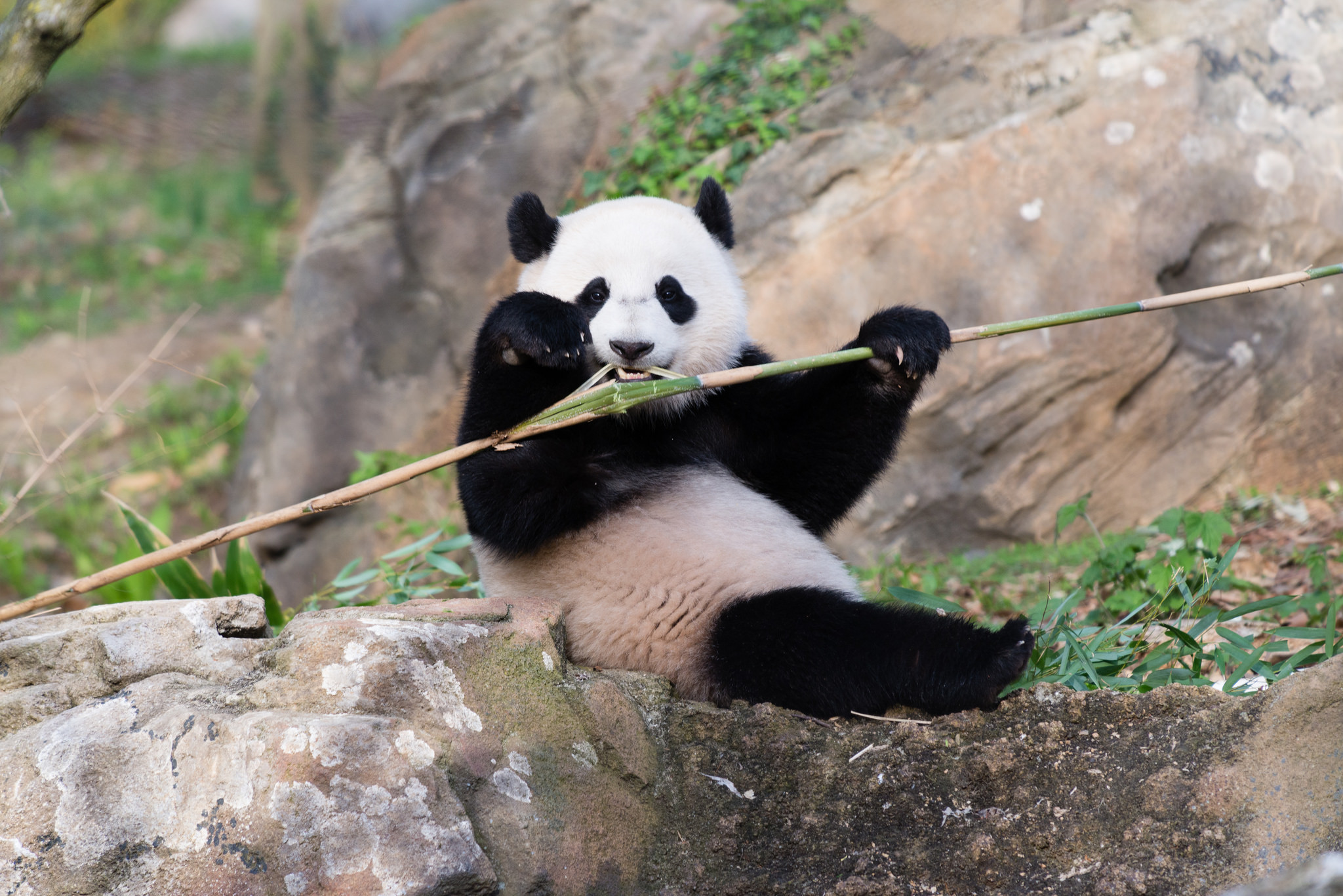
Is there a species that has, as the kids say. “fallen off” more than the panda? A bear that can’t fight, barely reproduces, and has trouble with basic physical coordination. They fall out of trees and off of playground equipment made for human toddlers. The panda is no longer equipped for survival. It cannot recognize danger and even if it could see trouble coming, it would be unable to do anything about it.
And I gotta tell you, there are some things about the current state of our human species that uncomfortably remind me of those black and white failures-to-thrive. Before I explain, I need you to know that I am doing my level best to restrain the unhinged rant that the paranoid alarmist in my head wants to unleash.

That isn’t to say that the remainder of my argument is well-thought out and reasonable, it’s just more reasonable that the stuff I keep shoved in the back of my mental closet. So you’ve been warned. Do not take any of this as professional advice, and certainly do not make any changes to your own life based on a theory I put together while unloading the dishwasher.
What are the panda traits I see in humanity right now?
Difficulty in procreation
You’d think making babies was a skill that was impossible to lose, but we’re doing our best to forgot how. Global fertility rate has fallen significantly over the last 70 years.

The magic number on this chart is 2.1. When your nation’s fertility rate drops below the rate of 2.1 children per woman, your population starts to shrink. More deaths than births. Its not a great scene. There are some countries that still have robust fertility rates (most of them in Africa and southeast Asia) but that won’t last forever. As countries become richer, their citizens have more choices for how to spend their lives. Parenthood is a considerable commitment of time and resources, and young men and women in prosperous nations are choosing to spend those resources elsewhere.
Another symptom of prosperity is a lack of pressure for a child to leave their parent’s home to start their own adult life. We can keep our kids at home, protecting them from the drudgery of adult obligations, until they are well into their twenties. But biology does not care about that. Both men and women hit their fertility peak around 23 years of age. So when you finally send your adult child out into the world at 25, they are already on the fertility downslope.
And then add a layer of rigid sexual norms that inhibit normal human interaction. Sure, the young folks talk a lot, A LOT, about sexual identity, but they adhere to increasingly puritanical restrictions around sex. Who is allowed to approach who, what difference is age is acceptable, what lengthy and legally binding consent agreements must be in place before holding hands. It’s enough to make a Victorian lady nod in restrained approval.
It’s also not helping that we think we can order the perfect partner via an app, like picking from a dessert cart. There is no perfect mate. Great partnerships (and babymaking is arguably the most important partnership you’ll ever have) are built on mutual growth and understanding. It’s not who you are today that’s important, but who you’ll become in the years ahead, and you build that parental version of yourself collaboratively.
Danger blindness
(I just made that phrase up. If you don’t like ‘danger blindness’ you can go be mad somewhere else. We don’t have time for that here). Survival depends on seeing danger ahead of time, and choosing to get out of its way. But we are victims of our own survival success. We are so much safer today than we were 20 years ago, and astoundingly safe in comparison with our ancestors. Most of us live a life of ease and comfort, surrounded by miracles like on-demand clean water and instantaneous communication with anyone around the world. That doesn’t mean we have stopped looking for danger, but it does mean that we’ve lost the ability to accurately recognize it. Whatever made us angry/scared/uncomfortable most recently is designated as The Big Problem, and it consumes our attention and resources. But at least we never check to see if our efforts to fix The Big Problem are actually having an effect.
Lack of personal responsibility
I’ll start by taking responsibility on behalf of my species: humans have done a great job in wiping out the wild pandas, and we should not have done that. Our love of shaping the natural environment to our liking has shoved the pandas out of their ecological niche. Our bad. But under that pressure from humanity, pandas haven’t really risen to the challenge of adaptation. I’m not panda-blaming, but a more resilient species would have at least explored an adaptive strategy.
So now the pandas needs humans to curate a safe environment that provides all the resources they need. Even in the wild, humans have to help the pandas survive. And a panda in the zoo has absolutely no self-sufficiency left in their body. They sit patiently in their play tree, waiting for food to show up. If they are grateful for the food when it shows up, I’ve never seen it. (Note: I do not watch pandas regularly. This is all a tortured metaphor)
That same attitude is prevalent in the complaints of modern society. An expectation that society owes you food and lodging, and to keep you in the manner in which you believe you deserve. But a thriving species needs to be self-reliant. Each adult member of our species is responsible for providing for their own basic needs, and for the basic needs of those who depend on them. In the case where an adult is incapable of providing for their own needs, the state should intervene to help them so that they can be as self-sufficient as possible. But “I don’t like working” does not qualify for state intervention.
Fatness
To be fair, I don’t know if pandas are carrying too much weight. Other bears seem to have a lot of junk in the trunk, so maybe the pandas are appropriately chubby. But for the sake of this argument, let’s assume pandas are fat. We certainly are.
We are fat, and getting fatter. No, it’s not because of GMOs, or seed oils, or microplastics, or systemic oppression. We eat more calories than we use, and the excess is stored as fat. Our meaty bodies are designed to expend as little energy as possible, while consuming as many calories as possible. And boy oh boy are we great at that. We eat too much. Our food is too rich. And our lives require very little physical effort. It all adds up to obesity, and obesity is detrimental to our survival.
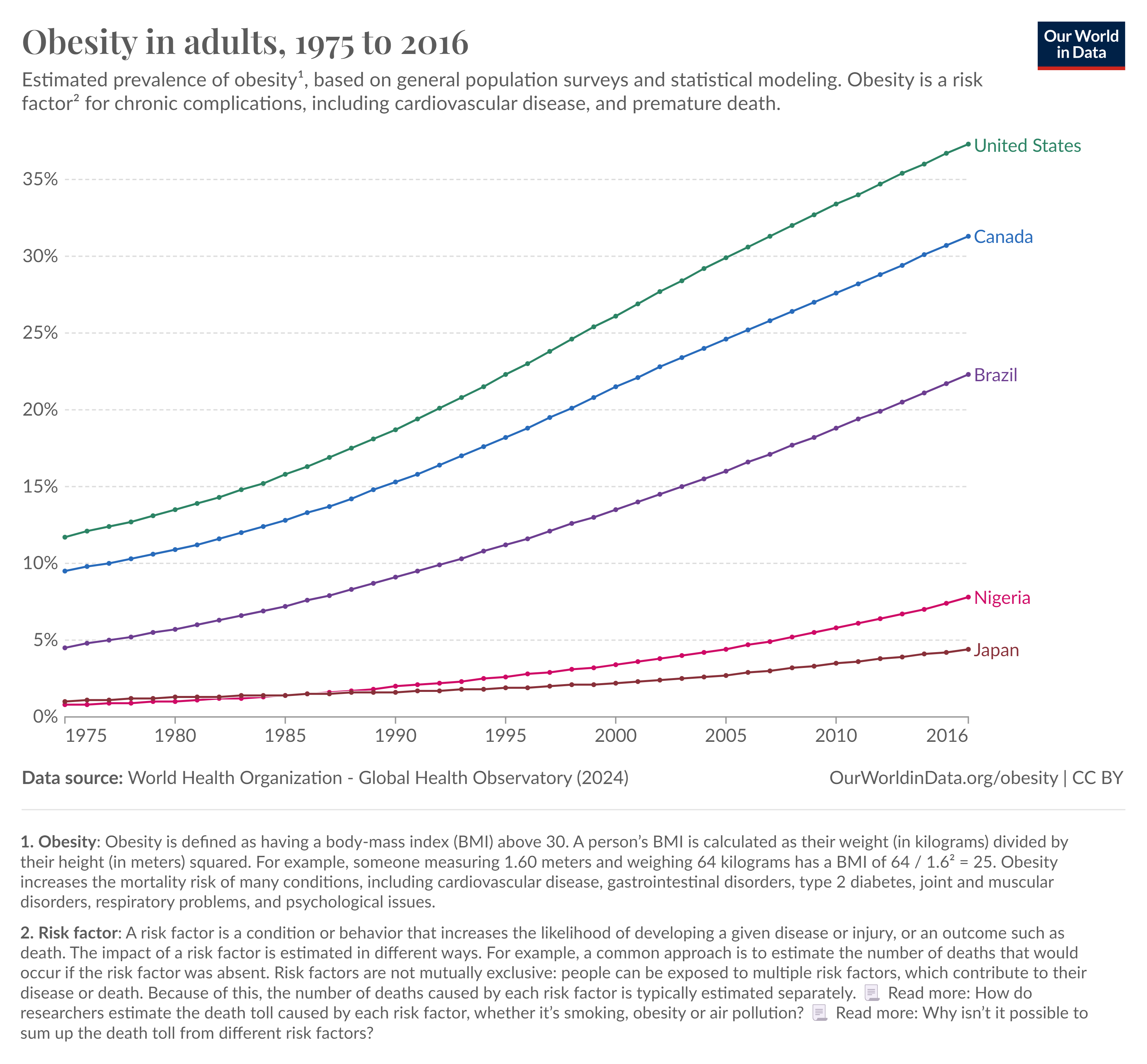
But do not despair! Put down the donut of sadness! Look instead at places like France and Japan. Both have much lower rates of adult obesity. I’m not suggesting we embrace either country’s dietary and exercise regime. But it’s important to remember that other humans are succeeding at something we want to succeed at. It is not a lost cause.
What does it all mean?
I don’t think we’re doomed for extinction. It’s my crackpot pessimism that wants to bemoan our panda similarities. The things that I’ve listed are real challenges, but the human spirit is much harder to snuff out. Our big brains love to find new puzzles. Our gentle decline in population could be addressed by robotic workers and cloning. We may have found a cure for our overeating (though I’d like a little bit more evaluation time before I sing the praises of Ozempic for all).
But for our resiliency to shine through, we have to take risks. Being risk-averse leads to calcified societies afraid of loud noises and scary shadows. Humans thrive on adventure, and the biggest adventure available to us is space. To the stars!
 Chris Loblaw, Author